O Pabellón Criollo é o adorado prato nacional da Venezuela, que representa lindamente a herança multicultural do país. O prato simboliza a união de europeus, africanos e povos indígenas através das suas cores distintas: arroz branco a representar os europeus, feijão preto a simbolizar os africanos e carne desfiada castanha a representar os povos indígenas. Esta refeição icónica é tradicionalmente servida no Dia Nacional da Venezuela (5 de julho) e tem um profundo significado cultural em toda a nação. O que torna o Pabellón Criollo verdadeiramente especial é o seu perfeito equilíbrio de sabores e texturas, frequentemente acompanhado por plátanos fritos doces (tajadas), arepas e queijo branco, criando uma refeição completa e satisfatória que conta a história da rica tapeçaria cultural da Venezuela.
Pabellón Criollo (Prato Nacional Venezuelano)
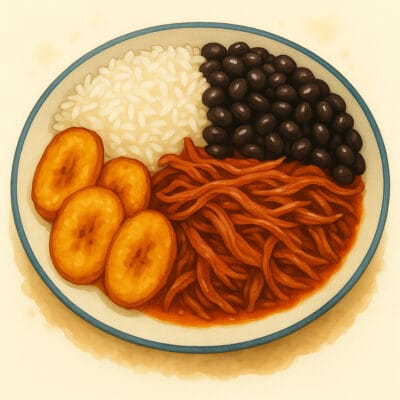
O prato nacional da Venezuela com arroz branco, feijão preto e carne de vaca desfiada, representando a união das culturas europeia, africana e indígena através das suas cores distintas.
Ingredients
- 200 g de arroz
- 500 ml de água para o arroz
- 2 plátanos
- 250 ml de óleo
- 500 g de feijão preto (enlatado/pré-cozinhado)
- ½ pimentão
- 2 dentes de alho
- 1 cebola
- 1 colher de chá de pimenta preta
- ½ colher de chá de cominho
- 2 colheres de chá de sal
- 100 g de açúcar (opcional)
- 100 g de bacon
- 1 kg de bife de flanco
- 3 litros de água
- 1 folha de louro
- 1 cenoura pequena
- 1 aipo pequeno
- 1 tomate
Directions
- Pique a cenoura e o aipo. Coloque a carne de flanco numa panela grande com água, folha de louro, cenoura, aipo, orégãos, pimenta e sal.
- Cozinhe a carne até ficar macia e tenra (cerca de 2 horas). Reserve 250 ml do caldo.
- Pique o bacon, o alho, o pimentão, a cebola e o tomate. Divida o alho, o pimentão e a cebola em duas partes iguais.
- Comece a cozinhar o arroz um pouco antes de a carne estar pronta.
- Aqueça o feijão com sal enquanto frita o bacon com metade do alho, cebola e pimentão. Adicione o cominho e a pimenta.
- Desfie a carne e frite-a com o restante alho, pimentão e cebola. Tempere com sal, cominho e pimenta.
- Adicione os tomates picados e o caldo reservado à carne. Leve a ferver e cozinhe por 10 minutos.
- Adicione o feijão à fritada de bacon e frite até o líquido evaporar. Adicione açúcar, se desejar.
- Sirva tradicionalmente com cada componente separado no prato.
- A carne desfiada (carne mechada) é o coração do prato, por isso cozinhe a carne até ficar muito macia para que se desfie facilmente. O feijão preto pode ser adoçado (endulzado) ou salgado, dependendo da tradição familiar. O Pabellón é tradicionalmente servido com tajadas (plátanos fritos doces), arepas e queijo branco ralado, que complementam os sabores salgados.
[/recipe-nutrition]
Por porção (aproximadamente): 700 calorias; 30 g de gordura; 75 g de carboidratos; 30 g de proteína; 80 mg de colesterol; 1000 mg de sódio.
[/recipe-nutrition]
- Chop the carrot and celery. Put the flank meat in a large pot with water, bay leaf, carrot, celery, oregano, pepper, and salt.
- Cook the meat until it’s soft and tender (around 2 hours). Reserve 250 ml (about 1 cup) of the stock.
- Chop the bacon, garlic, bell pepper, onion, and tomato. Split the garlic, bell pepper, and onion into two equal parts.
- Start cooking the rice just before the meat is ready.
- Heat the beans with salt while stir-frying the bacon with half of the garlic, onion, and bell pepper. Add the cumin and pepper.
- Shred the meat and stir-fry it with the remaining garlic, bell pepper, and onion. Season with salt, cumin, and pepper.
- Add the chopped tomatoes and the reserved stock to the meat. Bring to a boil and cook for 10 minutes.
- Add the beans to the bacon stir-fry and fry until the liquid evaporates. Add sugar if desired.
- Serve traditionally with each component separate on the plate. [/recipe-directions] [recipe-notes] The shredded meat (carne mechada) is the heart of the dish, so cook the meat until it’s very tender so it shreds easily. The black beans can be sweetened (endulzado) or salty, depending on family tradition. Pabellón is traditionally served with tajadas (sweet fried plantains), arepas, and grated white cheese, which complement the savory flavors.
Pabellón Criollo is Venezuela’s beloved national dish that beautifully represents the country’s multicultural heritage. The dish symbolizes the union of European, African, and Indigenous peoples through its distinctive colors: white rice representing Europeans, black beans symbolizing Africans, and brown shredded meat representing Indigenous peoples. This iconic meal is traditionally served on Venezuela’s National Day (July 5th) and holds deep cultural significance across the nation. What makes Pabellón Criollo truly special is its perfect balance of flavors and textures, often accompanied by sweet fried plantains (tajadas), arepas, and white cheese, creating a complete and satisfying meal that tells the story of Venezuela’s rich cultural tapestry.
[recipe title="Pabellón Criollo (Venezuelan National Dish)" servings="4 to 6 people" preptime="30 min" cooktime="2 h 15 min" totaltime="2 h 45 min" difficulty="medium" rating="5" image="https://livrodeculinaria.com/wp-content/uploads/2025/09/Venezuela-Pabellon-Criollo-400x400.jpg" description="Venezuela's national dish featuring white rice, black beans, and shredded beef, representing the union of European, African, and Indigenous cultures through its distinctive colors."] [recipe-ingredients] * 200 g (about 1 cup) of rice * 500 ml (about 2 cups) of water for rice * 2 plantains * 250 ml (about 1 cup) of oil * 500 g (about 1 lb) of black beans (canned/pre-cooked) * ½ bell pepper * 2 garlic cloves * 1 onion * 1 tsp of black pepper * ½ tsp of cumin * 2 tsp of salt * 100 g (about ½ cup) of sugar (optional) * 100 g (about 3.5 oz) of bacon * 1 kg (about 2.2 lbs) of flank steak * 3 liters (about 12 cups) of water * 1 bay leaf * 1 small carrot * 1 small celery * 1 tomato [/recipe-ingredients] [recipe-directions]
Nutrition
Per serving (approximately): 700 calories; 30 g fat; 75 g carbohydrates; 30 g protein; 80 mg cholesterol; 1000 mg sodium.