O Jeonju bibimbap é o prato de arroz misto mais famoso da Coreia, originário da cidade histórica de Jeonju há mais de 200 anos. Originalmente servido durante banquetes oferecidos por governadores, este prato gourmet foi outrora reservado para a nobreza. A versão autêntica de Jeonju inclui cerca de 30 ingredientes diferentes, com componentes chave como rebentos de feijão, geleia de feijão mungo amarelo (hwangpomook) e molho de soja fermentado. O que torna o Jeonju bibimbap verdadeiramente especial é a sua utilização de arroz cozinhado com caldo de carne e rebentos de feijão, coberto com uma disposição artística de vegetais temperados, carne e o essencial molho gochujang. O Hankook Jib, fundado em 1952, continua a ser o restaurante especializado mais antigo para este prato icónico.
Arroz Misto (Jeonju Bibimbap)
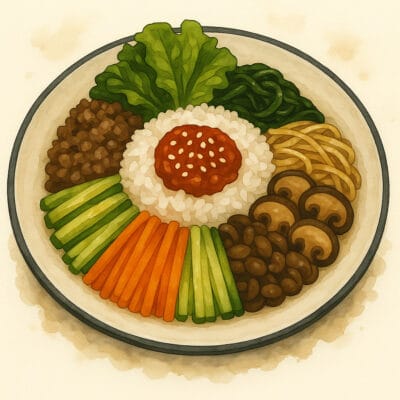
Autêntico Jeonju bibimbap com 30 ingredientes tradicionais, arroz com caldo de carne e o equilíbrio perfeito de vegetais temperados com molho gochujang.
Ingredients
- 3 chávenas de arroz de grão curto
- 225 g de carne tenra de vaca, fatiada finamente
- 1.5 colheres de sopa de molho de soja
- 2 colheres de chá de açúcar
- 2 colheres de chá de óleo de sésamo
- 2 colheres de chá de vinho de arroz para cozinhar
- 2.5 colheres de chá de alho picado
- 4 colheres de sopa de cebolinho picado
- 225 g de rebentos de feijão mungo
- 1 molho de espinafres
- 2 pepinos pequenos
- 115 g de cogumelos
- 2 cenouras médias
- 4 ovos
- 4 colheres de sopa de gochujang
- 2 colheres de chá de açúcar para o molho
- 1 colher de sopa de óleo de sésamo para o molho
- 1 colher de sopa de água
Directions
- Cozinhe o arroz de acordo com as instruções da embalagem e mantenha-o quente.
- Marine a carne de vaca com molho de soja, açúcar, óleo de sésamo, vinho de arroz, alho e cebolinho. Cozinhe até estar pronta.
- Branqueie os espinafres e os rebentos de feijão separadamente, tempere com óleo de sésamo, alho e sal.
- Corte os pepinos e as cenouras em juliana, salgue os pepinos e esprema o excesso de água.
- Salteie os cogumelos com alho e óleo de sésamo.
- Frite os ovos com a gema para cima.
- Misture o gochujang, o açúcar, o óleo de sésamo e a água para o molho.
- Disponha o arroz nas taças, coloque os vegetais e a carne em secções, e coloque o ovo por cima.
- Sirva com o molho gochujang à parte.
Nutrition
Por porção (aproximadamente): 600 calorias; 20 g de gordura; 75 g de carboidratos; 30 g de proteína; 180 mg de colesterol; 1000 mg de sódio.
Jeonju bibimbap is Korea’s most famous mixed rice dish, originating from the historic city of Jeonju over 200 years ago. Originally served during banquets hosted by governors, this gourmet dish was once reserved for nobility. The authentic Jeonju version features around 30 different ingredients, with key components including bean sprouts, yellow mung bean jelly (hwangpomook), and fermented soy sauce. What makes Jeonju bibimbap truly special is its use of rice cooked with beef broth and bean sprouts, topped with an artful arrangement of seasoned vegetables, meat, and the essential gochujang sauce. Hankook Jib, established in 1952, remains the oldest specialty restaurant for this iconic dish.
Mixed Rice (Jeonju Bibimbap)
Authentic Jeonju bibimbap featuring 30 traditional ingredients, beef broth rice, and the perfect balance of seasoned vegetables with gochujang sauce.
Ingredients
- 3 cups of short-grain rice
- 8 ounces of thinly sliced tender beef
- 1.5 tablespoons of soy sauce
- 2 teaspoons of sugar
- 2 teaspoons of sesame oil
- 2 teaspoons of cooking rice wine
- 2.5 teaspoons of minced garlic
- 4 tablespoons of chopped scallion
- 8 ounces of mung bean sprouts
- 1 bunch of spinach
- 2 small cucumbers
- 4 ounces of mushrooms
- 2 medium carrots
- 4 eggs
- 4 tablespoons of gochujang
- 2 teaspoons of sugar for sauce
- 1 tablespoon of sesame oil for sauce
- 1 tablespoon of water
Directions
- Cook the rice according to the package directions and keep it warm.
- Marinate the beef with the soy sauce, sugar, sesame oil, rice wine, garlic, and scallion. Cook until done.
- Blanch the spinach and bean sprouts separately, and season them with sesame oil, garlic, and salt.
- Julienne the cucumbers and carrots, salt the cucumbers, and squeeze out the excess water.
- Sauté the mushrooms with garlic and sesame oil.
- Fry the eggs sunny-side up.
- Mix the gochujang, sugar, sesame oil, and water for the sauce.
- Arrange the rice in bowls, top with the vegetables and beef in sections, and place an egg on top.
- Serve with the gochujang sauce on the side.
The presentation is a key part of bibimbap. The colorful and arranged layout of the vegetables makes it visually appealing. Traditional Jeonju bibimbap uses rice cooked with beef broth, which adds an extra layer of flavor to the dish. Before eating, mix everything together thoroughly with the gochujang sauce to combine the flavors and textures.
Nutrition
Per serving (approximately): 600 calories; 20 g fat; 75 g carbohydrates; 30 g protein; 180 mg cholesterol; 1000 mg sodium.