A Laksa é a icónica sopa de macarrão de coco picante de Singapura, que representa a bela fusão das tradições culinárias chinesas, malaias e peranakans. Este prato adorado surgiu do caldeirão multicultural do Sudeste Asiático, onde os imigrantes chineses adaptaram as suas sopas de massa com especiarias malaias locais e leite de coco. O que torna a Laksa verdadeiramente especial é o seu caldo incrivelmente rico e perfumado, construído sobre uma pasta de especiarias complexa que inclui malaguetas secas, erva-príncipe, galangal e pasta de camarão, tudo cozinhado em lume brando em leite de coco cremoso e coberto com camarões frescos, folhados de tofu e rebentos de feijão para um equilíbrio perfeito de texturas e sabores.
Sopa de Macarrão Picante (Laksa)
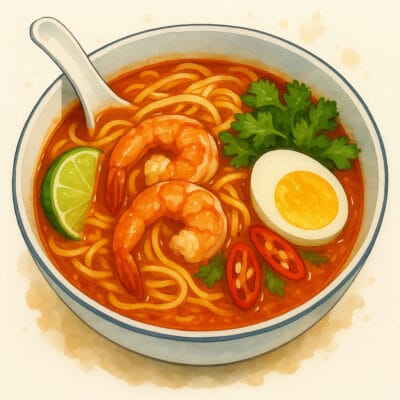
A icónica sopa de macarrão de coco picante de Singapura com um caldo rico e perfumado, macarrão de arroz, camarões e acompanhamentos tradicionais.
Ingredients
- 280 g de camarões crus com casca
- 4 chávenas de água
- 10 malaguetas vermelhas secas
- ½ chávena de chalotas picadas
- 1 colher de sopa de galangal picado
- 1 colher de sopa de gengibre picado
- 3 dentes de alho
- 1 caule de erva-príncipe
- 3 colheres de sopa de candlenuts
- 1 colher de chá de açafrão-da-terra em pó
- 2 colheres de sopa de camarão seco
- 1 colher de chá de coentro moído
- 1 colher de sopa de pasta de camarão fermentada (belacan)
- ½ colher de sopa de óleo neutro
- 2 chávenas de leite de coco
- 2 colheres de sopa de molho de peixe
- 2 colheres de chá de açúcar
- 225 g de macarrão de arroz (peso seco)
- ½ chávena de rebentos de feijão
- 6 folhados de tofu
- Hortelã vietnamita ou hortelã-comum
Directions
- Faça o caldo fervendo os camarões em água por 10 minutos. Retire os camarões e reserve o caldo.
- Triture todos os ingredientes da pasta de especiarias com um pouco de água até ficar suave.
- Aqueça o óleo numa panela grande e frite a pasta de especiarias até ficar perfumada, cerca de 5 minutos.
- Adicione o leite de coco, o molho de peixe, o açúcar e o caldo reservado. Cozinhe em lume brando por 10 minutos.
- Cozinhe o macarrão de arroz de acordo com as instruções da embalagem e divida-o pelas tigelas.
- Adicione os camarões de volta à sopa e aqueça-os. Prove e ajuste o tempero.
- Sirva a sopa sobre o macarrão e cubra com rebentos de feijão, folhados de tofu e hortelã.
Nutrition
Por porção (aproximadamente): 600 calorias; 30 g de gordura; 60 g de carboidratos; 25 g de proteína; 70 mg de colesterol; 1200 mg de sódio.
Laksa is Singapore’s iconic spicy coconut noodle soup that represents the beautiful fusion of Chinese, Malay, and Peranakan culinary traditions. This beloved dish emerged from the multicultural melting pot of Southeast Asia, where Chinese immigrants adapted their noodle soups with local Malay spices and coconut milk. What makes Laksa truly special is its incredibly rich and fragrant broth, built on a complex spice paste featuring dried chiles, lemongrass, galangal, and shrimp paste, all simmered in creamy coconut milk and topped with fresh prawns, tofu puffs, and bean sprouts for a perfect balance of textures and flavors.
Spicy Noodle Soup (Laksa)
Singapore's iconic spicy coconut noodle soup with a rich, fragrant broth, rice noodles, prawns, and traditional toppings.
Ingredients
- 10 oz of shell-on shrimp prawns, raw
- 4 cups of water
- 10 dried red chilis
- ½ cup of shallots, diced
- 1 tablespoon of galangal, chopped
- 1 tablespoon of ginger, chopped
- 3 cloves of garlic
- 1 stalk of lemongrass
- 3 tablespoons of candlenuts
- 1 teaspoon of turmeric powder
- 2 tablespoons of dried shrimp
- 1 teaspoon of ground coriander
- 1 tablespoon of fermented shrimp paste (belacan)
- ½ tablespoon of neutral oil
- 2 cups of coconut milk
- 2 tablespoons of fish sauce
- 2 teaspoons of sugar
- ½ lb of rice noodles (dried weight)
- ½ cup of beansprouts
- 6 tofu puffs
- Vietnamese mint or regular mint
Directions
- Make a stock by boiling the prawns in water for 10 minutes. Remove the prawns and reserve the stock.
- Blend all the spice paste ingredients with a little water until smooth.
- Heat the oil in a large pot and fry the spice paste until it’s fragrant, about 5 minutes.
- Add the coconut milk, fish sauce, sugar, and reserved stock. Simmer for 10 minutes.
- Cook the rice noodles according to the package directions and divide them among bowls.
- Add the prawns back to the soup and heat them through. Taste and adjust the seasoning.
- Ladle the soup over the noodles and top with the beansprouts, tofu puffs, and mint.
The spice paste is the heart of the soup. Frying it first is crucial to release its aromas. The candlenuts, which are similar to macadamia nuts, help to thicken the paste, giving it a richer texture. The soup can be made more or less spicy by adjusting the amount of chilis. Serve the soup immediately to prevent the noodles from soaking up too much liquid.
Nutrition
Per serving (approximately): 600 calories; 30 g fat; 60 g carbohydrates; 25 g protein; 70 mg cholesterol; 1200 mg sodium.