Ovos Moles de Aveiro: Uma Joia da Confeitaria Monástica Portuguesa
Os Ovos Moles de Aveiro são uma das mais prestigiadas e protegidas sobremesas de Portugal, detentores do estatuto de IGP (Indicação Geográfica Protegida) da União Europeia. Esta requintada iguaria teve origem no século XIX nos conventos de Aveiro, onde as freiras criavam este delicado doce usando apenas gemas de ovo e açúcar. A sobremesa consiste num rico e cremoso creme de ovos feito de gemas e calda de açúcar, tradicionalmente servido em cascas de hóstia comestíveis em forma de barricas, conchas e peixes – símbolos que representam a herança marítima de Aveiro. A receita exige uma técnica e tempo precisos, pois o creme deve atingir a consistência perfeita sem coalhar. Hoje, os Ovos Moles de Aveiro não são apenas uma sobremesa, mas um símbolo da excelência da doçaria portuguesa, representando séculos de tradição culinária monástica e o refinado paladar dos doces portugueses.
Ovos Moles de Aveiro
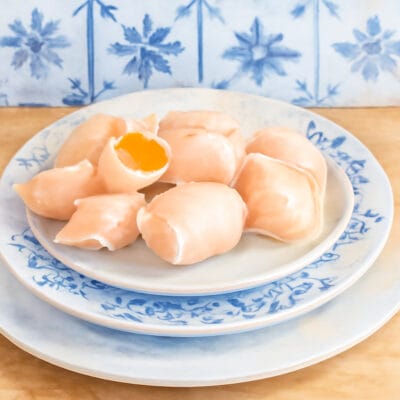
A mais prestigiada sobremesa protegida de Portugal, com um rico creme de gema de ovo em cascas de hóstia comestíveis, representando séculos de tradição de confeitaria monástica.
Ingredients
- Para o Creme: * 150 g de gema de ovo (de 9 ovos grandes) * 125 g de água * 250 g de açúcar granulado
- Para as Cascas de Hóstia: * 240 g de farinha de pastelaria * 150 g de água * 30 g de óleo ou azeite
Directions
- Numa panela de aço inoxidável, adicione o açúcar e 125 g de água. Mexa em lume médio até o açúcar dissolver.
- Leve a calda a ferver até a temperatura atingir 107 °C. Retire do lume e deixe arrefecer até cerca de 60 °C.
- Enquanto a calda arrefece, passe as gemas de ovo por um coador para uma tigela limpa.
- Adicione gradualmente a calda de açúcar arrefecida às gemas de ovo, mexendo constantemente para evitar que cozinhem.
- Despeje a mistura de volta para a panela e cozinhe em lume médio-baixo, mexendo constantemente, até o creme engrossar (cerca de 5 a 7 minutos).
- Transfira o creme para uma tigela, cubra com película aderente, encostando-a ao creme para evitar que forme uma crosta, e leve ao frigorífico até estar pronto para usar.
- Para as cascas de hóstia: misture a farinha, 150 g de água e o óleo até formar uma massa suave.
- Refrigere a massa por 20 minutos.
- Abra a massa muito fina (1 mm de espessura) e corte em discos de cerca de 7,5 cm de diâmetro.
- Coloque 1 colher de chá do creme de ovos em cada disco e dobre.
- Asse a 150 °C (300 °F) por 3-5 minutos, ou até ficarem ligeiramente dourados.
- A precisão é fundamental. Use um termómetro de cozinha para garantir que a calda e o creme atingem as temperaturas corretas.
- As cascas de hóstia podem ser difíceis de fazer em casa. Se preferir, pode comprá-las prontas em lojas especializadas ou online.
- Para evitar que as gemas cozinhem, adicione a calda gradualmente e mexa vigorosamente.
- O sabor rico e aveludado dos Ovos Moles depende da qualidade das gemas de ovo e da paciência na cozedura do creme.
Nutrition
Por Unidade: 120 calorias; 5 g de gordura; 15 g de hidratos de carbono; 3 g de proteína; 90 mg de colesterol; 10 mg de sódio.
—
Ovos Moles de Aveiro: A Jewel of Portuguese Monastic Confectionery
Ovos Moles de Aveiro is one of Portugal’s most prestigious and protected desserts, holding the EU’s PGI (Protected Geographical Indication) status. This exquisite delicacy originated in the 19th century in the convents of Aveiro, where nuns created this delicate sweet using only egg yolks and sugar. The dessert consists of a rich and creamy egg custard made from egg yolks and sugar syrup, traditionally served in edible wafer shells shaped like barrels, shells, and fish—symbols representing Aveiro’s maritime heritage. The recipe requires precise technique and timing, as the custard must achieve the perfect consistency without curdling. Today, Ovos Moles de Aveiro is not just a dessert but a symbol of Portuguese confectionery excellence, representing centuries of monastic culinary tradition and the refined palate of Portuguese sweets.
Ovos Moles de Aveiro (Aveiro Soft Eggs)
Portugal's most prestigious protected dessert from Aveiro, featuring rich egg yolk custard in edible wafer shells, representing centuries of monastic confectionery tradition.
Ingredients
- For the Custard: * 150 g (5.3 oz) egg yolk (from 9 large eggs) * 125 g (1/2 cup) water * 250 g (1 1/4 cups) granulated sugar
- For the Wafer Shells: * 240 g (2 cups) pastry flour * 150 g (3/4 cup) water * 30 g (2 tbsp) oil or olive oil
Directions
- In a medium stainless steel pot, add the sugar and 125 g of water. Stir over medium heat until the sugar dissolves.
- Bring the syrup to a boil until the temperature reaches 107 °C (225 °F). Remove from heat and let it cool to about 60 °C (140 °F).
- While the syrup cools, pass the egg yolks through a sieve into a clean bowl.
- Gradually add the cooled sugar syrup to the egg yolks, stirring constantly to prevent them from cooking.
- Pour the mixture back into the pot and cook on medium-low heat, stirring constantly, until the custard thickens (about 5-7 minutes).
- Transfer the custard to a bowl, cover with plastic wrap, pressing it down onto the custard’s surface to prevent a skin from forming, and refrigerate until ready to use.
- For the wafer shells: mix the flour, 150 g of water, and the oil until a smooth dough forms.
- Refrigerate the dough for 20 minutes.
- Roll the dough very thin (1 mm thickness) and cut it into discs about 7.5 cm (3 inches) in diameter.
- Place 1 teaspoon of the egg custard in each disc and fold it over.
- Bake at 150 °C (300 °F) for 3-5 minutes, or until they are lightly golden.
- Precision is key. Use a kitchen thermometer to ensure the syrup and custard reach the correct temperatures.
- The wafer shells can be difficult to make at home. If you prefer, you can buy them ready-made from specialty stores or online.
- To prevent the egg yolks from cooking, add the syrup gradually and stir vigorously.
- The rich, velvety flavor of Ovos Moles depends on the quality of the egg yolks and patience in cooking the custard.
Nutrition
Per Piece: 120 calories; 5 g fat; 15 g carbohydrates; 3 g protein; 90 mg cholesterol; 10 mg sodium.