O Beshbarmak, que significa “cinco dedos” em cazaque, é o prato nacional do Cazaquistão que recebe o seu nome da forma tradicional de o comer com as mãos. Este prato substancial teve origem nas tribos nómadas da Ásia Central, que dependiam fortemente dos animais para se alimentarem e precisavam de refeições sustentáveis para o seu estilo de vida extenuante. Tradicionalmente feito com carne de cavalo, camelo ou borrego, o prato era muito ritualístico e frequentemente preparado para ocasiões especiais, quando os convidados escolhiam um animal do rebanho. O que torna o beshbarmak verdadeiramente especial é o seu estilo de servir comunitário e a carne tenra servida sobre massa feita à mão, com um saboroso caldo de cebola, representando a essência da hospitalidade cazaque e da herança nómada.
Cinco Dedos (Beshbarmak)
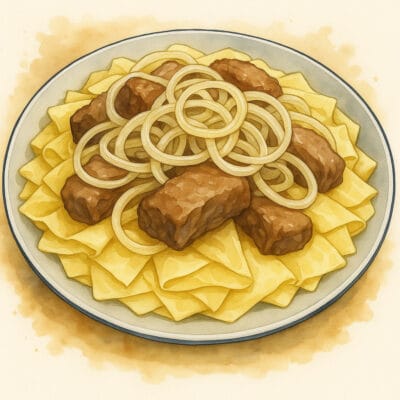
Tradicional beshbarmak cazaque com carne tenra e cozida, servida sobre massa feita à mão com um saboroso caldo de cebola, comido tradicionalmente com as mãos.
Ingredients
- 1 kg de carne de vaca desossada
- 3 cebolas
- 1 folha de louro
- 1 colher de chá de pimenta preta
- Sal a gosto
- 600 g de farinha
- ½ colher de chá de sal para a massa
- 2 ovos
- Água para a massa
Directions
- Coloque a carne de vaca numa panela com duas cebolas, cubra com água e leve a ferver, retirando a espuma.
- Tape a panela e cozinhe em lume brando por 2 horas até a carne ficar tenra e a desfazer-se do osso.
- Adicione a cebola picada, a folha de louro, a pimenta preta e o sal. Ferva por 5 minutos.
- Retire a carne, separe dos ossos e corte em pedaços do tamanho desejado.
- Para a massa: misture a farinha com sal e ovos, adicione a água gradualmente para formar uma massa firme.
- Amasse bem a massa, deixe-a repousar por 30 minutos coberta.
- Estenda a massa fina e corte em quadrados de 10 cm.
- Cozinhe os quadrados de massa no caldo da carne por 7-8 minutos.
- Disponha a massa numa travessa, cubra com a carne e as fatias de cebola.
- Sirva com o restante caldo à parte.
A chave para um bom beshbarmak é o caldo. O cozinhado lento da carne infunde o líquido com um sabor profundo e rico, que é crucial para cozinhar a massa e servir como molho. A massa deve ser fina e tenra. O prato é servido de forma comunitária numa travessa grande e o caldo é servido em taças separadas.
Nutrition
Por porção (aproximadamente): 800 calorias; 40 g de gordura; 70 g de carboidratos; 40 g de proteína; 150 mg de colesterol; 900 mg de sódio.
Beshbarmak, meaning “five fingers” in Kazakh, is the national dish of Kazakhstan that gets its name from the traditional way of eating it with bare hands. This hearty dish originated from the nomadic tribes of Central Asia who relied heavily on animals for nourishment and needed sustaining meals for their strenuous lifestyle. Traditionally made with horse meat, camel, or mutton, the dish was very ritualistic and often prepared for special occasions when guests would choose an animal from the herd. What makes beshbarmak truly special is its communal serving style and the tender meat served over hand-rolled noodles with flavorful onion broth, representing the essence of Kazakh hospitality and nomadic heritage.
Five Fingers (Beshbarmak)
Traditional Kazakh beshbarmak featuring tender boiled meat served over hand-rolled noodles with flavorful onion broth, eaten traditionally with hands.
Ingredients
- 1 kg (about 2.2 lbs) of boned beef
- 3 onions
- 1 bay leaf
- 1 teaspoon of black pepper
- Salt to taste
- 600 g (about 21 oz) of flour
- 1/2 teaspoon of salt for the dough
- 2 eggs
- Water for the dough
Directions
- Put the beef in a pot with two onions, cover with water, and bring to a boil, removing the foam.
- Cover the pot and simmer for 2 hours until the meat is tender and falling off the bone.
- Add the chopped onion, bay leaf, black pepper, and salt. Boil for 5 minutes.
- Remove the meat, separate it from the bones, and cut it into preferred sizes.
- For the noodles: mix the flour with salt and eggs, and gradually add water to form a firm dough.
- Knead the dough well, and let it rest for 30 minutes covered.
- Roll the dough thin and cut it into 10 cm (4-inch) squares.
- Boil the noodle squares in the meat broth for 7-8 minutes.
- Arrange the noodles on a platter, and top them with the meat and sliced onions.
- Serve with the remaining broth on the side.
The key to a good beshbarmak is the broth. The slow cooking of the meat infuses the liquid with a deep, rich flavor, which is crucial for cooking the noodles and serving as a sauce. The noodles should be thin and tender. The dish is served communally on a large platter, and the broth is served in separate bowls.
Nutrition
Per serving (approximately): 800 calories; 40 g fat; 70 g carbohydrates; 40 g protein; 150 mg cholesterol; 900 mg sodium.