O Xerém com Conquilhas é um prato tradicional da região do Algarve, no sul de Portugal, que representa o casamento perfeito entre a terra e o mar que caracteriza a culinária algarvia. Este prato rústico combina o xerém (uma farinha de milho grossa, semelhante à polenta) com conquilhas frescas, criando uma refeição substancial e saborosa que reflete a herança agrícola e marítima da região. O prato nasceu da necessidade de criar refeições nutritivas e substanciais utilizando ingredientes disponíveis localmente – o milho das áreas do interior e o marisco fresco da costa atlântica. A textura cremosa da farinha de milho complementa na perfeição o sabor salgado e adocicado das conquilhas, enquanto os coentros frescos adicionam o toque distintivo português que torna este prato unicamente algarvio.
Xerém com Conquilhas
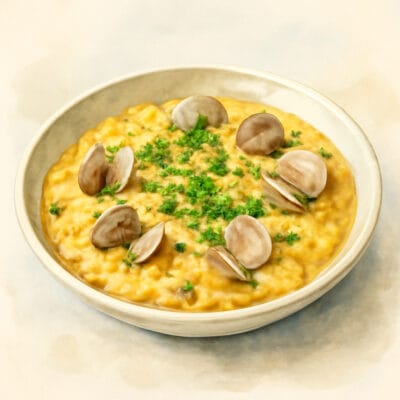
Um prato tradicional algarvio que combina o xerém cremoso com conquilhas frescas, representando a fusão perfeita entre a terra e o mar na culinária costeira portuguesa.
Ingredients
- 1.5 kg de conquilhas (conchas, berbigões)
- 500 g de farinha de milho
- 4 dentes de alho laminados
- 2.5 L de água
- 100 ml de vinho branco
- 100 ml de azeite
- 1 molho de coentros frescos
- 1 folha de louro
- Sal e pimenta branca a gosto
Directions
- Lave bem as conquilhas em água corrente para remover toda a areia.
- Numa panela grande, aqueça o azeite em lume brando e adicione os alhos laminados. Frite-os ligeiramente, sem os deixar queimar.
- Adicione a folha de louro, o vinho, metade dos coentros picados, as conquilhas, o sal e a pimenta. Deixe ferver até as conquilhas se abrirem.
- Assim que as conquilhas abrirem, retire a panela do lume.
- Retire a casca da maioria das conquilhas, deixando algumas com casca para decorar o prato no final.
- Volte a colocar o caldo (sem as conquilhas) na panela e leve-o novamente a ferver.
- Quando o caldo estiver a ferver, adicione gradualmente a farinha de milho com a ajuda de um coador, mexendo constantemente para evitar a formação de grumos.
- Ajuste o sal, adicione o restante dos coentros e junte as conquilhas sem casca à panela, mexendo bem.
- Continue a mexer até que a farinha de milho tenha absorvido todo o caldo. O xerém estará pronto quando a consistência for cremosa, mas ainda firme.
- Sirva o xerém numa travessa funda, decorado com as conquilhas com casca e um pouco de coentros picados por cima.
Nutrition
Por porção (aproximadamente): 580 calorias; 33 g de gordura; 50.6 g de carboidratos; 20.3 g de proteína; 50 mg de colesterol; 760 mg de sódio.
Xerém com Conquilhas is a traditional dish from the Algarve region of southern Portugal, representing the perfect marriage between land and sea that characterizes Algarvian cuisine. This rustic dish combines xerém (coarse cornmeal similar to polenta) with fresh clams, creating a hearty and flavorful meal that reflects the region’s agricultural and maritime heritage. The dish originated from the need to create substantial, nutritious meals using locally available ingredients—corn from the inland areas and fresh shellfish from the Atlantic coast. The creamy texture of the cornmeal perfectly complements the briny sweetness of the clams, while fresh cilantro (coriander) adds the distinctive Portuguese touch that makes this dish uniquely Algarvian.
Xerém com Conquilhas (Algarve Cornmeal with Clams)
A traditional Algarve dish combining creamy cornmeal with fresh clams, representing the perfect fusion of land and sea in Portuguese coastal cuisine.
Ingredients
- 1.5 kg (about 3.3 lbs) of clams
- 500 g (about 1.1 lbs) of cornmeal flour
- 4 sliced garlic cloves
- 2.5 L (about 85 fl oz) of water
- 100 ml (about 3.4 fl oz) of white wine
- 100 ml (about 3.4 fl oz) of olive oil
- 1 bunch of fresh cilantro
- 1 bay leaf
- Salt and white pepper to taste
Directions
- Wash clams thoroughly in running water to remove sand.
- In a large pot, heat the olive oil over low heat and add the sliced garlic. Fry lightly, without letting it burn.
- Add the bay leaf, wine, half of the chopped cilantro, the clams, salt, and pepper. Bring to a boil until the clams open.
- Once the clams have opened, remove the pot from the heat.
- Remove the shells from most of the clams, keeping some with shells for decoration.
- Return the broth (without the clams) to the pot and bring it to a boil again.
- When the broth is boiling, gradually add the cornmeal using a sieve while stirring constantly to prevent lumps from forming.
- Adjust the salt, add the remaining cilantro, and return the shelled clams to the pot, stirring well.
- Continue to stir until the cornmeal has absorbed all the broth. The xerém is ready when the consistency is creamy but still firm.
- Serve the xerém in a deep bowl, garnished with the clams in their shells and a little chopped cilantro on top.
Nutrition
Per serving (approximately): 580 calories; 33 g fat; 50.6 g carbohydrates; 20.3 g protein; 50 mg cholesterol; 760 mg sodium.