O Folar de Olhão: Um Doce Símbolo da Páscoa Algarvia
O Folar de Olhão é um pão doce tradicional de Páscoa, originário da cidade piscatória de Olhão, no Algarve, no sul de Portugal. Este pão rico e aromático está profundamente ligado às tradições de Páscoa portuguesas e representa a alegria e a celebração da ressurreição. Ao contrário de outros folares portugueses que podem conter carne, a versão de Olhão é tipicamente doce, enriquecida com ovos, manteiga e frequentemente aromatizada com anis ou chá de erva-doce, o que lhe confere uma qualidade aromática distinta. A cor dourada do pão provém do uso generoso de gemas de ovo, simbolizando a nova vida e o renascimento associados à Páscoa. Tradicionalmente preparado por famílias durante a Semana Santa, este folar une as comunidades e representa as ricas tradições de panificação transmitidas por gerações nesta cidade costeira do Algarve.
Folar de Olhão
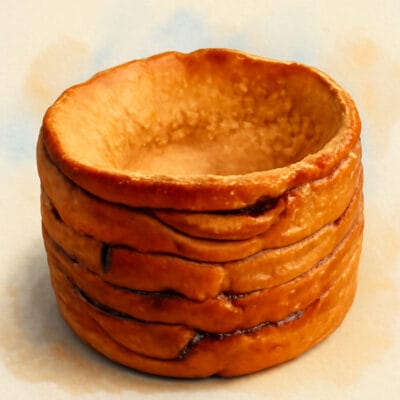
Um pão de Páscoa tradicional de Olhão, no Algarve, enriquecido com ovos e manteiga, com um delicioso aroma de anis, representando a alegria e a celebração da Páscoa na tradição portuguesa.
Ingredients
- 300 g de açúcar + 1 colher de chá
- 225 g de manteiga + 1 colher de sopa
- 50 g de banha de porco
- 2 ovos médios
- 600 g de farinha de trigo + 3 colheres de sopa
- 120 ml de leite
- 10 g de fermento de padeiro
- 1 colher de sopa de canela em pó
- 1 colher de chá de raspa de limão
- Chá de erva-doce q.b.
Directions
- Aqueça ligeiramente o leite (a cerca de 35 °C). Adicione o fermento e 1 colher de chá de açúcar. Mexa e deixe repousar por 10 minutos para ativar o fermento.
- Numa tigela grande, combine 500 g de farinha, o restante do açúcar, a canela e a raspa de limão.
- Derreta 225 g de manteiga e a banha. Bata bem os ovos.
- Adicione alternadamente a mistura de leite, a mistura de manteiga e os ovos à tigela com a farinha, enquanto bate a massa até ficar arejada.
- Prepare um chá de erva-doce forte e adicione-o gradualmente à massa, amassando até obter uma consistência que não se cole às mãos.
- Cubra a massa e deixe-a levedar num local quente até duplicar de volume (cerca de 1-2 horas).
- Para o recheio, misture a manteiga derretida, o açúcar mascavado e a canela. (Nota: esta receita não especifica as quantidades do recheio, use a gosto).
- Unte uma forma redonda e alta com a manteiga restante e forre com papel vegetal.
- Dê à massa a forma desejada e coloque-a na forma.
- Leve ao forno pré-aquecido a 200 °C (392 °F) por cerca de 40 minutos, ou até ficar dourado e cozido no interior.
- Para um folar com um sabor mais intenso, pode adicionar sementes de anis à massa.
- O segredo de um bom folar é a paciência. Certifique-se de que a massa leveda o suficiente para obter uma textura fofa e leve.
- A temperatura do forno pode variar, por isso fique de olho no folar para evitar que queime. Se a superfície dourar demasiado rápido, cubra-o com papel de alumínio.
- Para saber se o folar está cozido, insira um palito no centro. Se sair limpo, está pronto.
Nutrition
Por Fatia: 380 calorias; 18 g de gordura; 50 g de hidratos de carbono; 6 g de proteína; 65 mg de colesterol; 120 mg de sódio.
—
Folar de Olhão: A Sweet Symbol of Algarve Easter
Folar de Olhão is a traditional sweet Easter bread from the fishing town of Olhão, in the southern Portuguese region of the Algarve. This rich and flavorful bread is deeply tied to Portuguese Easter traditions, representing joy and the celebration of the resurrection. Unlike other Portuguese “folares” that may contain meat, the Olhão version is typically sweet, enriched with eggs and butter, and often flavored with anise or fennel tea, giving it a distinctive aromatic quality. The bread’s golden color comes from the generous use of egg yolks, symbolizing new life and rebirth associated with Easter. Traditionally prepared by families during Holy Week, this “folar” brings communities together and represents the rich baking traditions passed down through generations in this coastal Algarve town.
Folar de Olhão (Olhão Easter Bread)
A traditional Easter bread from Olhão, in the Algarve, enriched with eggs and butter, with a delightful anise aroma, representing the joy and celebration of Easter in Portuguese tradition.
Ingredients
- 300 g (1 1/2 cups) sugar + 1 tsp
- 225 g (1 cup) butter + 1 tbsp
- 50 g (1/4 cup) pork lard
- 2 medium eggs
- 600 g (4 1/2 cups) all-purpose flour + 3 tbsp
- 120 ml (1/2 cup) milk
- 10 g (1 1/2 tsp) dry yeast
- 1 tbsp cinnamon powder
- 1 tsp lemon zest
- Fennel tea as needed
Directions
- Heat the milk slightly (to about 35 °C / 95 °F). Add the yeast and 1 tsp of sugar. Stir and let rest for 10 minutes to activate the yeast.
- In a large bowl, combine 500 g of flour, the remaining sugar, cinnamon, and lemon zest.
- Melt 225 g of butter and the lard. Beat the eggs well.
- Alternately add the milk mixture, the butter mixture, and the eggs to the flour bowl, beating until the dough is airy.
- Prepare a strong fennel tea and gradually add it to the dough, kneading until you get a consistent dough that doesn’t stick to your hands.
- Cover the dough and let it rise in a warm place until it doubles in volume (about 1-2 hours).
- For the filling, mix the melted butter, brown sugar, and cinnamon. (Note: this recipe doesn’t specify filling quantities, so use to your liking).
- Grease a round, high-sided pan with the remaining butter and line it with parchment paper.
- Shape the dough and place it in the pan.
- Bake in a preheated oven at 200 °C (392 °F) for about 40 minutes, or until golden brown and cooked through.
- For a more intense flavor, you can add anise seeds to the dough.
- The secret to a good “folar” is patience. Make sure the dough rises sufficiently to achieve a fluffy and light texture.
- Oven temperatures can vary, so keep an eye on the folar to prevent it from burning. If the top browns too quickly, cover it with aluminum foil.
- To check if the folar is cooked, insert a toothpick into the center. If it comes out clean, it’s ready.
Nutrition
Per Slice: 380 calories; 18 g fat; 50 g carbohydrates; 6 g protein; 65 mg cholesterol; 120 mg sodium.